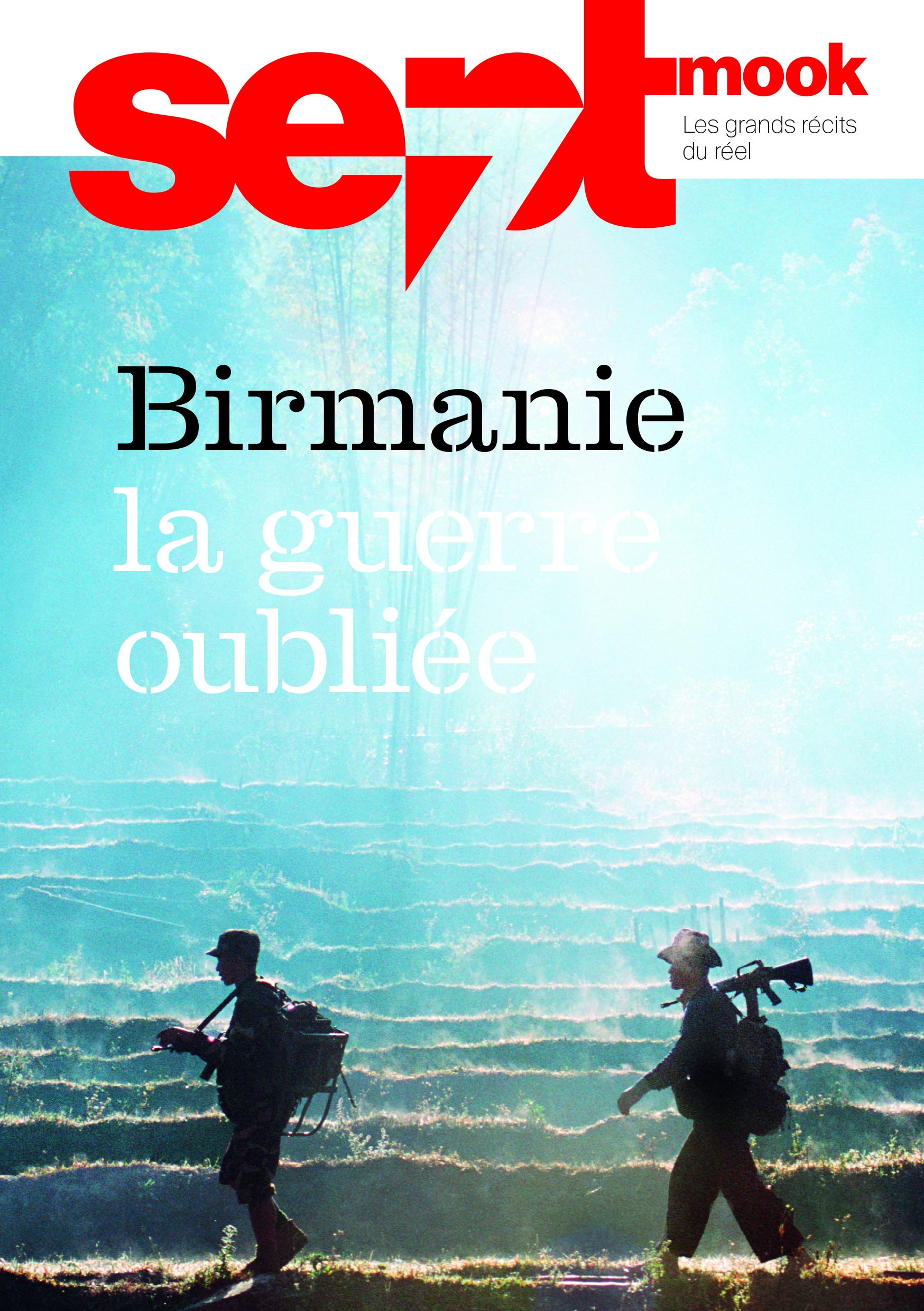


Find this story in Sept mook #54, Birmanie, la guerre oubliée
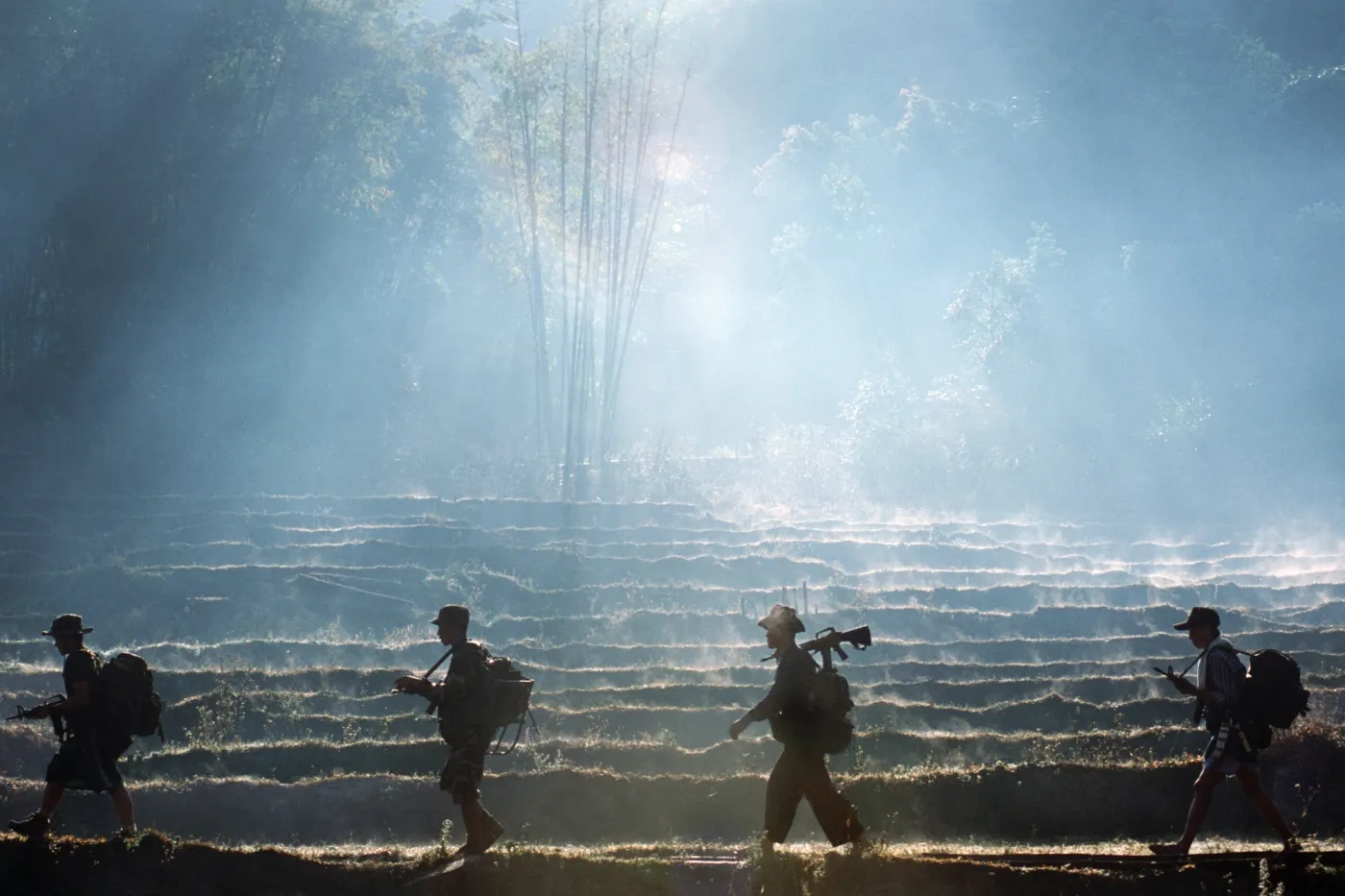
In the water of a stream winding through a dappled clearing, young resistance fighters gently wash the body of one of their own, killed in an ambush. I discover this moving sequence in April 1986 on Antenne 2, the predecessor of France 2, in a documentary about the endless struggle of the Karen minority against the Burmese authorities since 1949. I know nothing about Burma. At most, I have heard that this distant Asian country is closed to the world and ruled by a mad dictator, Ne Win. These images move me to the point of determining my professional career. A few months earlier, after studying journalism in Lille, I joined the French-speaking editorial team of the American agency Associated Press (AP) in Paris. A Grail for the young Belgian journalist that I am. I do, in fact, have a famous compatriot and inspiration: Tintin! But unlike Milou's master, I have to take notes and write articles to earn my salary. I rent a 35 m² on the 5th floor without an elevator in a building on rue de la Folie-Méricourt in the heart of the 11th arrondissement, which Parisian "bobos" have since set their sights on. The AP offices are located in the very chic 8th, near the Champs-Élysées, on the 6th floor—with an elevator—of a posh but characterless building. The work at the agency is intense and varied. An excellent school of synthesis and speed. In the same day, I can go from a demonstration for or against someone or something to a minister's press conference or to translating into French the obituary of a Hollywood star.
A few weeks later, when I meet Marc Charuel, the author of the Antenne 2 documentary, this independent journalist who is a bit older than me smiles: "Ah! Another one who wants to go to the Karens." I didn't know that this "forgotten" conflict, as they say of an old book tucked away at the bottom of a trunk, was very popular with my Parisian colleagues. This resistance also attracts young French volunteers with military experience acquired in prestigious schools like Saint-Cyr. They are often right-wing extremists, sometimes afflicted with psychopathy, eager for battles and blood they have only known in textbooks and on training fields. There are also idealists or simple adventurers eager to support this Karen resistance led by viscerally anti-communist warlords. Charuel, with whom I quickly become friends, graciously gives me the contact for the main guerrilla movement, the KNU (Karen National Union), in Mae Sot, a small Thai town on the Burmese border. My decision is made. During my first summer vacation, in May 1987, I will go freelance to Thailand and venture among the Karens. To me, this mysterious and magnetic jungle! I have a few months to prepare this report. At the end of the 1980s, Google and the internet are terms of science fiction. To get information, one must go to those places now listed under "historical monuments," the libraries. Paris has no shortage of them. While the number of books on Burma is insignificant, there is still a bible on ethnic struggles, a university thesis written in 1985 by Pierre Fistié, a French researcher from the French School of the Far East (EFEO), whose title Burma or the Quest for Unity is unfortunately still relevant four decades later. I learn that the country is composed of two-thirds of a majority ethnic group, the Bamars, who have held power since independence in 1948. The remaining third represents a mosaic of over a hundred so-called minority ethnic groups and sub-groups, among the best known being the Arakanese, Chins, Kachins, Karennis, Karens, Mons, and Shans, who have the peculiarity of occupying two-thirds of the territory, mainly mountainous and virgin forest areas rich in natural resources: jade, rubies, gold, copper, precious woods, rivers... Since 1948, several of them, demanding independence or autonomy falsely promised to them, have risen against the young Bamar power. Uninterrupted armed struggles to this day.
I also learn that the French film director Yves Boisset has just finished filming in Thailand for a television series called Médecins des hommes, which takes place among... the Karens! The story of adventurous doctors played by Evelyne Bouix and Christophe Malavoy, members of an NGO inspired by Médecins Sans Frontières, who, in a jungle hospital, come to the aid of Karen civilians taking refuge along the Burmese border. Boisset invites me to the Billancourt Studios where he has begun editing the film. After a lunch at the studio canteen where I encounter some of the current "stars" — I remember Claire Nebout — I am invited into the editing room. The action scenes, shot in the region of the famous River Kwai, only fuel my dreams and strengthen my attraction to this people and the conflict that tears them apart. And in May 1987, I fly to Bangkok where I take a bus to Mae Sot, some 500 kilometers further northwest. Alongside my position as a journalist-editor at AP, I have learned, for the needs of my freelance activity, the basics of photography from patient colleagues, notably from the agency. I can admit today, some of them discreetly offered me rolls of slides, taken from their laboratory stocks during my early years of reporting in Asia. Given the price of those Fuji 100 and 400, it represented quite a saving for me. In Mae Sot, a sleepy town crushed by humid heat, I quickly become disillusioned. The Karen contact informs me that the KNU is in a meeting and no one has time to deal with me. "Come back next year." Crash! My dream collapses at the very first steps.
Share this story


by Thierry Falise