
Frédéric Sauser did not have the childhood he dreamed of, and his future seemed uncertain. Faced with this inevitability, he thought it was an advantage he should seize. He carried nothing behind him; no regret would prevent him from drawing a line under his childhood. Free from anything that might burden him, he would travel without baggage. By blending his lyrical appetites with the realities of the world, he would choose the freedom to act and think about his life. "Fabulating is a precautionary principle," notes Patrice Delbourg in L’odyssée Cendrars (Ecriture, 2010). This staging of a life is not only original but unique in the annals of French literature, then boxed in, trapped by its principles and tradition. The adolescent thus had an ambition, and this choice would not be denied. But to achieve it, he would have to change the rules of a game that did not concern him. Henceforth, nothing would oppose the plan he had chosen: to do so, he would redefine his intellectual codes of conduct and justify all transgressions... even if it meant making his mystification a jest. A role-playing game in which he would take center stage.
The young man is a desperate soul who constantly writes the synopsis of his life in a series of sometimes improbable situations, which he artfully justifies as predestined. He loves to act; action makes him inventive; there will always be time to reflect on the consequences of his choices and make them the epic of his existence. Guided by spontaneity, he will venture far from the beaten path to seek adventure off the maps, in the margins of sometimes unreasonable logic. His goal is to invent himself without denying himself. He reassures himself, reports Miriam Cendrars in the biography she dedicated to her father (Balland, 1984). At seventeen, he boards the train that takes him far from home and exclaims: "I am doubling myself, my soul is sitting opposite me." For if he has dreams, he aspires to fulfill them. He constantly revises the script and immediately gives himself the lead role in a story where he is sometimes just an obscure extra. No matter! He writes the version that will be authoritative and thus becomes the rightful owner of his own novel: the author of his life.
In the eleventh volume of "Poètes d’aujourd’hui" that Pierre Seghers dedicated during his lifetime to Blaise Cendrars, the young essayist Louis Parrot offers a first reading of his life in light of his work; but he draws only hasty conclusions from his wanderings, still in the making. His pen runs without order and without vanishing point, suggesting that the modernist writer had become the witness of the wanderer he portrayed in his books. Like most observers of the time, he lacked perspective. Yet we know today that his bibliography will never be a confession, and his life, much more sedentary than initially believed, cannot absolve him of his literary fantasies. It will take time for exegesis to become aware of this and accept him as a brilliant and pious liar. While he languishes in his hometown of La Chaux-de-Fonds, one obsession motivates him: to leave. As if he had to be born elsewhere, far from what does not resemble him. In a still dreamlike universe, devoid of all dross. The world he builds is his own. He projects himself into it with his ambitions and his sole criteria for existence. Frédéric Sauser does not really hate himself: he does not recognize himself. His rags embarrass him, condition him, and constrain him in a perspective that bothers him. He is already too big for the tight suit they want to dress him in. So, he tells himself that changing his name will allow him to build a new identity. No matter: he will invent a passport free of any reference to the past that entangles him. Arthur Rimbaud fascinates him: he will cultivate his difference and, like him, put on shoes of wind. That his mentor was cursed pleases him quite a bit. The other: the one he aspires to be, the one he yearns to become, will be free of all resilience. History will bear witness. He will wipe the slate clean of everything he has not written, of every page of life he has not signed. He will be the hero of his own novel, or nothing. He will never let go of the prey for the shadow, except to consent in good faith if Providence decides to hold his hand. And if, by misfortune, fate resists him, if bad luck or adversity blocks the path of the adventure he has traced for himself, he will not cease to steer toward the stars and continue to make plans on the comet. Because it is in the land of childhood that great designs are forged, that exceptional destinies are drawn, the young and clever Frédéric Sauser will never entrust his life to anything but his instinct as a condottiere. When one aspires to leave, explains Daniel Girardin, one must do so "with the idea of a necessary physical and intellectual stripping, a progressive abandonment of what has been learned [...] It is a mirror in which the traveler can discover his naked but authentic silhouette, his own identity." (L’oeil du voyageur, Hoëbeke, 2008.) For Frédéric Sauser, it was a way to cross swords with his own truth. He was at the age where one seeks oneself in flight without suspecting the risk incurred by the deceitful certainties that litter the path. What was he pursuing? At that time in his life, nothing allowed him to answer. But he refused to be confined and did everything to win this gamble. He wanted to inhabit only himself, to be his only abode. Certainly, "the journey is promise and reward," assures Claude Roy in his Bon usage du monde (Rencontre, 1964). But failing to go around oneself, it is vain to go around the world! This maxim will have the value of a codicil half a century later.
From adolescence, Frédéric Sauser will not cease to express the will to realize himself on the sole foundation of his fantasies, which are to double himself, to shed his skin to escape the chrysalis of his birth in the canton of Neuchâtel, on September 1, 1887, under the poorly assumed sign of Virgo, and to escape his Bernese origins, which he supposes genetically incompatible with his dreams of grandeur and freedom. Unlike his ancestors who exiled themselves in the 18th century to survive peasant misery, the young man intoxicated by poetry at the behest of Charles Baudelaire obviously did not intend to conform to paternal authority. His parents would not dispose of his destiny! He was fiercely determined in his project since his father had led his family into a succession of professional and financial setbacks. His decision was made while he attended, against his will, as a dilettante and without conviction, the School of Commerce in Neuchâtel: "I will leave. Far away. I just have to go. Here, I am too much." This poetic confession, published in "Les Cahiers romands" (Vol à voiles) in 1932, confirms and seals an irreversible decision. Contrary to some later fabrications, this episode of his life is authentic. The great hopes he formulates are not lyrical flights: he will leave. And even if it is a family injunction, the opportunity is not to be overlooked. Thus, at the end of September 1904, having just celebrated his seventeenth birthday, armed with his sole conviction, Frédéric Sauser leaves Switzerland for Russia, where revolution is brewing. He leaves by train, stops in Moscow, then joins Saint Petersburg to begin an apprenticeship with a "Swiss watchmaker of all kinds," Albert Leuba.
Then comes the affair of La légende de Novgorode, which is perhaps the founding act of his fierce will to differentiate himself in a world that does not recognize him as he is, as he would like to be. During this first journey, Sauser will take advantage of this providential escape to exercise his writerly inclinations. He was still a minor and was enthusiastic about his talent, as he saw it as the tool of his emancipation. This first poem, which speaks of revolution, war, illicit trafficking, and love, was long taken for what it is not, as there are credible references to the adventures of the young man exiled on the banks of the Neva. However, nothing proves that La légende de Novgorode really existed, except for the author's claim. Despite the efforts he will make throughout his life to certify the existence of this text, his manuscript rested only on his good faith and will remain apocryphal. Until a ghost edition appeared, more than thirty years after his death, translated into Russian in 1909. In doubt, this text accredits the first literary hesitations of a gifted beginner ready to shake up the literary establishment. And if it is a scam, it is the work of a forger that the unruly poet would not have denied. Miriam Cendrars, who prefaced the French translation at Fata Morgana in 1995, was convinced of its authenticity. It can be read that since the appearance of her father in the world of French poetry, "La légende de Novgorode de l’or gris et du silence holds the first place in his work." Did he imagine it during this first expatriation, or did he draw inspiration from it later? If the mystery remains, it contributes to the myth he applied himself to perpetuate.
Back in Switzerland after breaking his contract, Frédéric Sauser will live off odd jobs and the generosity of his older brother. He enrolled at the University of Bern and took courses in literature and art history as a free student. Poetry consumes him, but he publishes nothing yet, so obsessed is he by the influence of his mentors, Paul Verlaine, Gérard de Nerval... and Rémy de Gourmont, whom he has just discovered and whose work will support his quest for identity. The author of L’idéalisme is the thinker he now admires most in the world, if not the mediator of his youthful works, a guide who advocates the perfect accomplishment of an idea as required by writers who endure the torments of doubt. In Bourlinguer, which he will publish in 1948, he continues to assert that the discovery of his thought was for him "an intellectual birth date." Aware of having chosen the right course, the one who will soon become Blaise Cendrars writes more and more and personalizes his style; but as long as he is not sure of himself and his work, he does not publish, reworking his craft like a journeyman. He will later say that he does not correct his manuscripts: this bravado will be that of the professional writer. For now, he tests himself, and as long as he has not found himself, nothing will leak from his work in progress. At the same time, he draws closer to the artistic and literary circles he has begun to frequent in Paris, where he settled in a furnished hotel in 1910, with a young Polish woman he met at the University of Bern: Féla Poznanska. "Writing. Where does this itch come from? Meanwhile, I locked myself in my room and read day and night everything that fell into my hands, for he who reads, sleeps, and dines," he will say at the end of his life to describe this happy period of lean times.
"The wanderer crystallizes a whole series of more or less verbalized desires that are like so many structural elements," notes sociologist Michel Maffesoli (Le voyage, Dervy, 2003). Without ever naming the young author asserting himself on the baptismal fonts of modern literature, the sociologist seems to draw inspiration from him to illuminate his theory of world conquest: "What is in project can potentially become canonical, provided it rebels against the industrious mechanism of society, he says in substance, any physical or psychological sedentariness being a potentially reductive act of rooting." The journey as conceived by the son of Georges Sauser is a rolling stone on the path. "In opposition to the instituted, the instituting is a source of regeneration." He is in the process of molting, becoming an objector. Yet if this act is still induced, it is disordered only in appearance. For he intelligently designs the plan, always with an eraser at hand to correct the trajectory and keep control over the things of life, which could make him deviate far from his course. His navigation compass then points to the New World, where his friend Féla has gone to settle. Driven by the desire to join her, Frédéric embarks for New York on November 21, 1911. This first crossing as a free man will make him cherish the sea forever and give an initiatory dimension to his literary approach: whether it be the Birma or the Volturno, the Formose or the Gelria on which he truly took passage and sailed the Atlantic. Yet many other liners will later support his imagination. All the ships he will take or not take will serve as an alibi, and his experience as a long-haul passenger will always create the illusion in his poems and novels. He will know how to stage them and give them the lead role. Until the end of his life, ships will cross his books and sometimes run aground on the shoals of his contradictions. He will one day confide: "I will tell the thing as it happened to me, without exaggerating anything, but without hiding anything [...] limiting myself to situating in the South what happened in the North, in the East what happened in the West, and vice versa, and camouflaging, as always in my Histoires vraies, the name of the character but putting myself nominally on stage to guarantee the authenticity of my story." Helmsman of adventures that will conceptualize his work and life, Blaise Cendrars' ships are much more than a theatrical backdrop: they are the blueprint of an existential project. And as Robert Guyon supports in his Echos du bastingage, his travel stories "say more than they seem."
When he lands in North America, Frédéric Sauser is in search of a virgin land he seeks to explore as a conqueror rather than an immigrant, and everything contributes to the valorization of a composed destiny; and since this will not always be possible, he will become the magician of his own novel; the magnificent fabulist for whom New York will serve as a springboard to fill the blanks of his project and his credulous readers with good conscience. He cuts to his measure the wanderer's suit he seeks to make credible, first in his eyes as a traveler without baggage whose profile wants to be a source of regeneration and perpetual reworking. He presupposes that the geographical and intellectual wandering he imposes on himself will allow him to reconcile with himself and become the ferryman of his own fiction. The painful experience the poet is about to have during his stay in New York will not call into question his adolescent inclinations, but it will become the revealer of his certainties. In the Brasier d’étoiles filantes (Transboréal, 2014) he dedicates to Blaise Cendrars, Stéphane Georis is right to assert that the fleeing poet does not travel, since he is lost... but that he explores, that he admits his life provided he reinvents it every day, wants to be from nowhere to be from everywhere. He will elevate his state of statelessness to the idea of freedom and that of the writer he is in departure to the permanent necessity of renewing himself. New York therefore disenchants him, he finds no anchorage there and despairs of never making a place for himself. The American dream has turned into a nightmare: "The police are already there to prevent any desire for rebellion," translates Geodis the comedian, his double. His project is blown. He draws black images from it, sullied by the customs' hassles of which Georges Perec speaks in a foundational text on dispersion, closure, wandering, and hope that was Ellis Island for nearly sixteen million migrants from Europe between 1892 and 1924 (Ellis Island, P.O.L., 1995). Against his will, Frédéric Sauser was one of them, to whom this question was posed: Who are you? Like many of his unfortunate companions, he could only lie. "Ellis Island is […] the very place of exile," Perec will write, "that is to say, the place of absence of place, the non-place, the nowhere..." The search for their identity passed through the approval of this place. Frédéric Sauser passed through Ellis Island on December 12, 1911, after mingling with the diaspora on the deck of the Birma, whose decks and passageways he appropriated. He was at home there, at ease and in his closed universe promised to all the turpitudes of the storm and the promiscuity of migrants. He will only speak of it later. What he thinks of it is found only in his personal archives. He considered himself "too bad a poet still" to publish his spiritual exercises, "The themes that are sketched in this intimate, personal writing, with no publication project, notes Robert Guyon (Les bateaux de Blaise Cendrars, Apogée, 2002), we will find them, developed or not, but present, rhapsodized in one way or another throughout the life and work of the one who is about to be reborn as Blaise Cendrars." If New York decanted the mutation of Frédéric Sauser, the monastic and mystical happiness of being at sea undoubtedly inspired him. The disenchantment awaiting him in New York will give him vertigo to the point of rushing into a church on Easter day, to find the refuge that will save him from a sinister fate. He finds no place in this city where violence vies with the ostentatious misery of the street and the difficulties of daily life despair him. It is the story of a predicted shipwreck, a certain loss, a probable abdication. Yet during the night of April 6 to 7, wandering the streets of the indifferent big city, he finds refuge in the Passion of Christ. He sees it as a transition to redemption, from which he did not expect revelation. Struck, the poet who was sleeping reveals himself and, in the hours that follow, he sketches the first version of a text he will write during the following summer: "Lord, today is the day of your Name, / I read in an old book the story of your Passion, / And your anguish and your efforts and your good words / That weep in the book, gently monotonous." On April 15, he learns from the newspapers that the Titanic sank in the night off Newfoundland! What historians will analyze as the disappearance of a world without a future, doomed to the failure of its reincarnation, the young poet will see as the omen of an ideal avatar, an opportune rebirth. The sign of a upheaval whose consequences he will consider in light of his personal life. He will rise from his ashes. The augurs have spoken!
Frédéric Sauser is dead... a great writer free from his ghosts has conjured the error of his birth under the name of Blaise Cendrars. It is under this pseudonym that Les Pâques à New York will appear in 1919 in Paris at Editions des Hommes nouveaux. The author will explain himself ten years later, in a handwritten note, then in a text entitled Une nuit dans la forêt: "Into ashes are transmuted / What I love and possess / Everything I love and embrace / Is immediately transmuted into ashes." Henceforth, Sauser must be imagined happy in the shaping of his image: constantly in gestation, always in balance. He has rejected his name to assert his personality. If traveling is stripping oneself, he will have pushed the adage to its paroxysm. Blaise Cendras is now stateless, and this idea pleases him. In Un homme en partance (Presses polytechniques et universitaires romandes, 2010), Christine Le Quellec Cottier faithfully reports his words: "I have only one thought, to write! I am sick. My skull cracks like an overripe pomegranate, warm blood clogs my eyes, falls on my hands. I write, and my thoughts pale, twist like in a furnace. I have too much fever." He exhausts himself and has no money. The manuscript of Les Pâques à New York, under review at Mercure de France for several months, will be returned to him without explanation, he fumes to his brother and Guillaume Apollinaire, who had warmly recommended it. No matter! He will publish it himself. Since then, his work and life will no longer quite belong to him; he will chase after the ghost he generated by becoming Blaise Cendrars. His process of refoundation will carry him like a huge wave and make him lose the sense of reality. But what he now seeks is to make Blaise Cendrars live by proxy. To give carte blanche to the poet. The man whose name will appear on his passport, no matter what he does to erase the memory, will always be in his shadow, watching his every move to ensure he does not betray his literary double, which will never be more than his virtual reincarnation. He will do his best: the characters he will constantly put in situations will only be his avatars, credible as long as they are under surveillance, but quick to demand accountability at the first misstep. Under inventory benefit, Blaise Cendrars will remain their debtor. "I am the first of my name, since I invented it from scratch," he will tirelessly repeat until the end of his days. Louis Parrot was the first to reveal the secrets of this living puzzle when, the same year Bourlinguer was published, he stated: "Blaise Cendrars [...] easily integrates into his ancestry the most curious, the most singular characters, provided they can be, one day or another, the hero of one of his chronicles." Thus, he will preside over his new life during the decades that will follow the conquest of his true false story. A prosperous period during which he will make his place in literary circles by imposing his caricature on the world.
In reality, it was never to New York or Rio de Janeiro that Cendrars sailed, but towards his future as a writer. He describes himself as a wanderer whose adventure contributes to the enhancement of life; his references will be often disjointed heroes, who, like him, built themselves in chaos and self-denial. Such will be Johann August Suter, Jean Galmot, or John Paul Jones, fractured by history, whom he will make his fantasized doubles to legitimize his own role; who built a reputation through bluff: "I made myself a new name / Visible like a blue poster / And red mounted on scaffolding / Behind which we build / novelties of tomorrow," he wrote between 1912 and 1924 (From the Whole World to the Heart of the World, Denoël, 1958), as he was about to discover the Paris of the modernists. But before entering the world of writers, it was among painters that he made his first steps; in a community of spirit that bordered on the renewal of arts and thought. The artists resembled him more, who castigated themselves to better regenerate. To transform the world they aspired to, it was necessary to give it new blood; and to do so, they took the risk of getting lost, perhaps losing themselves. Such was the challenge of artists at the dawn of the 20th century. These are Christs on the cross in the manner of Marc Chagall admired by the young voluntary exile, artists of his caliber about whom Cendrars would write that they commit suicide every day! But it is Pablo Picasso who fascinates him. If Chagall is a redeemer in his eyes, he compares the Andalusian to Bluebeard, condemned for being the sacrificer of the mores of his time. About Picasso, he would write: "I know no more tormented temperament, more restless spirit, faster and more subtle fingers and brushes. His ardor, his skill, his pride, the acrobatics, love, cruelty, elegance, drawing, arabesque, perversity, rage, the occult, his acute taste, relate him to Gilles de Rais." Thus, he makes him the first of the liberated painters. Like his Harlequins, useful jesters in the destruction of all forms of regency, his painting wears a mask on its face, he concludes in a hollow indictment against obscure resistances. Blaise Cendrars thus built himself on the poetics of painters by incarnating in their canvases. But if he owes them his inspiration, he knew how to harvest his talent and anchor it in an era conducive to the rebirth of arts and letters. Picasso, Braque, Delauney... and Cendrars revolted to express the incongruity of the classical tradition, still in vogue among a devout bourgeoisie, hostile to the disruptions of ordinary thought. They transgressed the sacred concept of continuity required by popular wisdom. With these new precursors, it is the thunderous entrance of a third dimension. Following the same principle, Blaise Cendrars deconstructed his decor as the cubists were doing at the beginning of the 1900s. Juan Gris was then trying this definition, which gave cubism the will to "create new ensembles of known elements, constituted by allusions or metaphors." What Alfred Jarry translated as a revolution, Cendrars would express as a "refoundation" of the world based on the purity of primitive civilizations, of which "Negro art" was the reference, the forgotten epicenter of the spirit. Picasso would immerse himself in it to paint Les Demoiselles d'Avignon in 1907, before Cendrars published his Anthologie nègre in 1921, followed by a collection of Petits contes nègres pour les enfants des Blancs in 1929. The era adhered to the apology of the source and referred to the epic of humanity whose organization was made by layers on anonymous ruins. Wasn't there the admission of a secret conviction? emphasizes José Pierre in a famous essay on cubism (Rencontre, 1966): "Didn't they have the ambition to elaborate an absolute language, of permanent value and which would be the painting"... even an ideal language, free from any obedience and chapel? In turn, Cendrars will give objects, to the life that animates them, new meanings, unprecedented in the imaginary corpus of his time. Everything that falls under his eyes will come to life; he will innervate what is frozen, give it resonance. The contents of his travel trunks will be animated by an improbable breath, which he will carry in his cruises to the ends of the world and of himself by giving life to everyday objects. Nourished by the same artistic experimentation, Man Ray explains in his Autoportrait that he liked to take everything that fell into his hands to sublimate it, to make a new experience each time: the key to a hotel room, a handkerchief, pencils, a brush, a candle, a piece of string... when Blaise Cendrars gives his shoes and sweater, his shirts and pajamas, his toiletries and his charm sublimated values! For the lover of Kiki de Montparnasse and disciple of Tristan Tzara, a static work allowed "to draw conclusions at leisure." Now that he has fixed his story by giving it the relief and colors of his choices, Cendrars could stick to this very officially validated version by signing it for posterity. But it is only a stage in his life, for destiny reserves him an itinerary to his excess.
Thanks to the painters, Cendrars asserts himself in the Parnassus of poets and writers, and his texts make him talked about; he begins to be published, notably in France and Germany. His writing pleases, but he still mainly responds to publishers' commissions to try to live by his pen. His own work is nonetheless in gestation. But under the appearances of a fulfilled social life, the young exile is nonetheless alone. Féla has still not returned from New York. He is cold in winter and hungry all year round. While waiting for her return, it is in the company of Sonia Delaunay that he creates his first masterpiece in 1913: it is an artistic and literary revolution that defines in its own way the dawn of the 20th century. The prose of the Trans-Siberian and of the little Jehanne of France, whose sketch dates back to his stays in Russia, tells of his young experience as a poet and traveler that he wants to engrave in his nascent biography: "At that time I was in my adolescence / I was barely sixteen and I no longer remembered my childhood / I was 16,000 leagues from my birth / I was in Moscow, in the city of a thousand and three bell towers and seven stations / And I did not have enough of the seven stations and the thousand and three towers / For my adolescence was then so ardent and so mad / That my heart, in turn, burned like the temple of Ephesus and like the Red Square of Moscow / When the sun sets [...]" This poem is an illuminated fresco by Sonia Delaunay; each of the 150 copies is an original edition made by the artist's hand. Together, they had just invented the simultaneity of expression. Blaise Cendrars takes the opportunity to give himself the role of an actor under the spotlight, whose name appears at the top of the poster for the first time. When asked later if he really traveled aboard the Trans-Siberian, he would reply: "What does it matter! The essential thing is that I took you there."
When World War I breaks out, Cendrars is writing the "elastic poems" and the "adventures of his seven uncles" that he invents according to his desires and needs, to constitute a lineage of ancestors commensurate with his ambitions and a hereditary megalomania with which he endows his presumed "uncles." But the great upheaval of the world will make the idealized character in which he had slipped like a stowaway until now, an exemplary trench companion. In the press, he begins by signing a call to foreigners to stand against the aggressor, the barbarian: "The hour is grave. Every man worthy of the name must act today, must defend himself from remaining inactive in the midst of the most formidable explosions that history has ever recorded [...]" Thus, to preserve his ideal, he will make the impending charnel house a waking nightmare, a parenthesis during which he will become Frédéric Sauser again, a volunteer in the French army with the rank of corporal. However, it is in the heart of a storm whose consequences he had not imagined, in the sufferings of Sauser that Cendrars will later seek his inspiration. It is in the maelstrom of his true memories and the realities of his real life that he will give full measure to his talent. Without giving himself the beautiful role or turning away from any circumstantial decantation whatsoever. It will take him time to untangle his contradictions, another war... no longer in the role of the poet this time, but in that of a memorialist in troubled waters whose argument will be literary. For now, he is unwittingly drawn into the terrible realities of each day. On September 28, 1915, on the fourth day of the Champagne offensive, his battalion is caught under enemy fire. He is seriously wounded by an explosive machine-gun bullet while his section is stopped by a barbed wire network. Immediately evacuated, he will be amputated of his right arm above the elbow. Cendrars has lost "the hand that holds the pen and turns the pages of books," can be read in the booklet of the Cendrars exhibition at the Library of the City of La Chaux-de-Fonds in 2015 (All this is worth living); but at the same time, he stoically explains that he still has "two legs to travel and one hand to write"! The War in Luxembourg that he writes in 1916 accounts for the duality experienced by the soldier in his head and in his flesh, whose perceptions clash and decant: "Only little children play at war." Cendrars is invaded by the relevance of Frédéric Sauser. Thirty years later, he will write in The Severed Hand, the second volume of his tetralogy: "A human arm all dripping with blood, a right arm severed above the elbow and whose still-living hand was digging into the ground with its fingers as if to take root." It is a chilling observation, evoked without any poetic emotion; the memory of a humanity trampled, pounded, asphyxiated, bled... which will soon prove to be of unexpected importance for the continuation of his literary career.
Now that he is reformed, Blaise Cendrars is reborn from the ashes of war. He settles with Féla whom he has just married, and the two boys she has already given him. He gradually reconnects with Parisian life, which is still reeling from the war. The cannon roars at the gates of Paris where German zeppelins make deadly incursions. Nevertheless, he has resumed writing and sometimes leaves the capital for the Côte d'Azur, where he draws up a catalog of works that he says he is working on with determination. It is undoubtedly his way of exorcising the future, already too short in his devouring eyes. He will not cease to elaborate other improbable lists, which are discovered even in the bibliographic pages of his books. There are found haphazardly poems and novels, stories and plays, hagiographies and cinema projects, poetic tracts and art brochures, some of which will see the light of day among dozens of aborted drafts. As if the announcements reassured him about the time allotted to him by destiny. If he pretends as before the war, the heart is no longer quite in it: it is because he is in delicacy with the great work he carries, but whose gestation seems complicated. What he publishes connects him to the time when the poet dreamed awake. These are stories exhumed from the past, before the mutilation. He tries it, however, through the medium of a novel written in the form of a screenplay. It is a kind of biting tale in which God capitalizes in his celestial enterprise the denatured souls of men he has thrown into the blind furnace of war. Nevertheless, history will make it the birth certificate of the "left-handed poet." Written as a synopsis, it leads Blaise Cendrars to try new experiences. He deliberately turns away from poetry and the novel to focus on publishing, cinema, theater, ballet. All forms of artistic expression. He gropes, seeks a reason to be the man he has neglected due to events. Blaise Cendrars sees in the armistice a symbol of resurrection that coincides with the meeting of Raymone Duchâteau, who will be present at his side until his death. French publishing is reborn and it is a fully recovered man who resumes his pilgrim's staff for unsuspected horizons. But he does not seem made to live a banal commitment, which would bring him back to family traditions he has wanted to break free from all his life. He has decided that his destiny will not follow marked paths. His road must be strewn with adventures. He then dips his pen in the most innovative inks and this gives him a reputation he cultivates on purpose; and because his interests lead him to drift far from literary consensus and reading habits, he will sail long alone aboard his boat. As a solitary writer. "The seventh year of my life as a man was beginning," he notes in 1945 in The Struck Man, the first volume of his biographical tetralogy. "And if I started from scratch?" he wrote to Raymone from the little house she had made available to him near Versailles.
The long-awaited trigger occurred in 1924, after Cendrars met the Brazilian journalist Oswald de Andrade and his wife Tarsila do Amaral, a modernist painter. Over there, on the other side of the Atlantic, the artists are avant-garde and swear only by Cendrars. A patron then sends him a ticket to São Paulo by the first boat. Thus, he embarked on the Formose bound for Brazil, for three weeks at sea during which he would transform the learning of his previous crossing into a literary experience. At thirty-seven, this navigation gives him the absolute certainty that he has found his way and that he no longer has to prove himself, for he is expected this time as the messenger of modernism: a messiah of new times! In the Road Leaves he writes during the journey, he writes: "Twelve hats wave / I disembark / And they photograph me." A banquet is offered to him where the elite is invited to meet him: "An hour of taxi along the beach / Speed horn presentations laughs young people Paris Rio Brazil France interviews presentations laughs / We go to the Press Cave / Then we return to lunch in town / The dishes are not yet served that already the newspapers talk about me and publish the photo from earlier." An article published in the Revista do Brasil shortly after his arrival gives an overview of the impatience that presided over his arrival: "Here is the man that São Paulo will receive for a few months!" could be read in the local press. Cendrars will return several times to this land that will exorcise his doubts and regenerate his temporary uncertainties. From 1925, he successively publishes three novels whose adventurers are his own transformation: it seems that he has finally found himself in the maze of his questions and identity investigations. He no longer has a past, but a future that he strives to make indisputable. He advances head high on the smoking ruins of his former life and a world in ruins. He no longer doubts himself. Like Johann August Suter at the time of the gold rush in California, John Paul Jones during the American War of Independence, and Jean Galmot, a contemporary of Cendrars and deputy of French Guiana unjustly accused of fraud, he builds his legend in the light of the adventurers from whom he expects approval. They embody in his eyes the marginal lives he aspires to join, because they represent his heroic and symbolic ideal. Like his new sponsors, he wants to exist not only for himself, for, after so much effort, he enjoys the enthusiasm reserved for him by his contemporaries. Claude Leroy says in the introduction to his work in the prestigious edition of La Pléiade that "his heroes are Christian martyrs, their lives Christic passions."
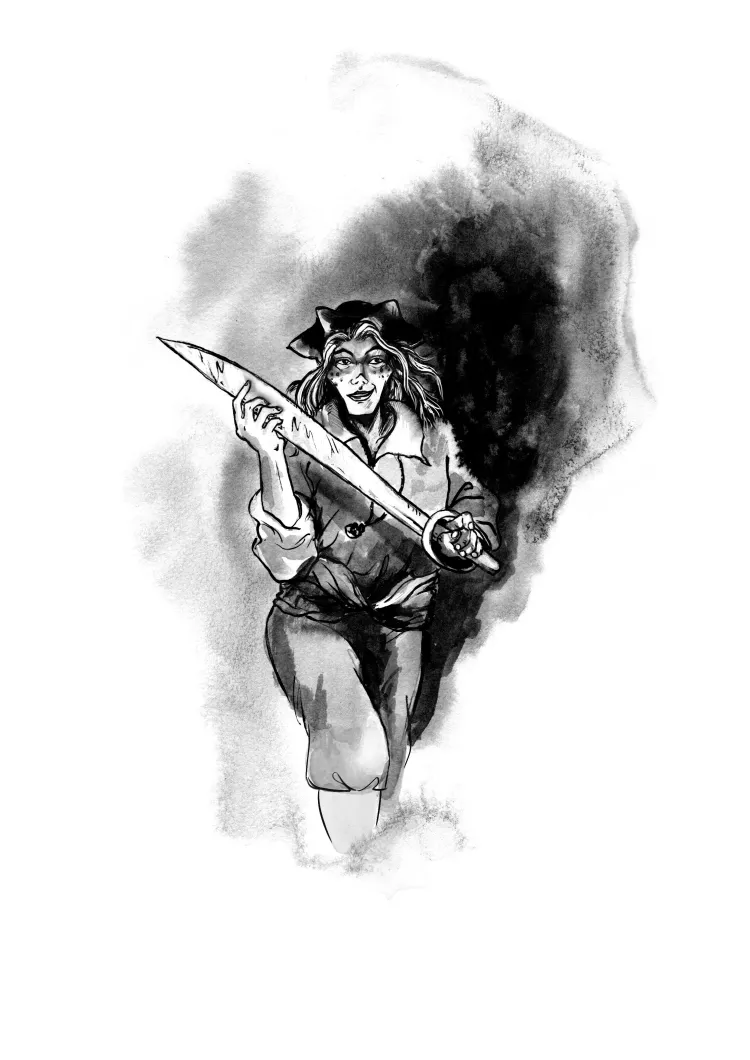
He will therefore never have ceased to flee to free himself from his family without asperities, until the end of a long apprenticeship of denial and renunciation. Then, he will complete the masterpiece by inventing a life all in mosaics, moving from black to color and from silent to speaking. With moreover this genius of the scenario that makes believe that everything is true. With his ruffian's head, one-armed corsair, Blaise Cendrars will make the fortune of Parisian salons and radio shows that will tear him away. He will amaze his listeners with his eloquence, speak, tell, describe in detail what he has invented from scratch. It will be his truth, free from any contestation. He is an intuitive who transposes what he has lived and dreamed. His immense trilogy of the twenties is now considered the accomplishment of a life made to give himself personal legitimacy, in front of a mirror whose tain reflects what he has patiently erected until he is convinced of it. But as a tireless dervish, he has given meaning to his existence, and so well turned on himself in concentric circles until he returns to his steps that he will end up getting tired of his virtuous lie: "Our salvation belongs to us," he will say in substance. He will ultimately always write the same book, until his complete redemption. Leaving, writing, building... and greeting his audience, such was his obsession. Because his peculiarity is to constantly create, always with the same fundamentals that he readapts, constantly reworking his vision without visibility. Blaise Cendrars has claimed everything, and its opposite... notably on the theme of wandering. But writing and leaving can be complementary and contradictory. However, when he claims that he cannot be simultaneously a writer and a traveler, he lends himself to all interpretations, which are as many questions. After the first escapes, family and patronymic, he will embark on a final expedition of which he will be the sole companion of fortune. These will be his voyages in troubled waters, all in balance between what he has made of his life and what he claims when he observes his reflection in the mirror without tain that he brandishes before him. He will henceforth give to hear, according to the measured expression of Patrice Delbourg. However, nothing is done by chance with Blaise Cendrars, too attached to completing his autobiography according to his own parameters; because destruction, disappearance are necessary for him to fertilize the story from which he expects germination. To achieve this, he makes a novel of his life because his life is not a novel; and does not cease to question everything. He has the obsession of patching, which now supplants the confused reconstruction that is forbidden to him by the simple fact that he is a social man: darning, attempting impossible sutures on the wounds of the past will become his new obsession. A frenzy from which he will not recover. However, if we know the most prestigious of his books, those that have made Cendrars a confirmed writer by the history of French Letters even in its translations, there are in his bibliography dozens of less popular and no less daring titles, more discreet without being obscure, in which we discover both the founding elements of the pre-war poet and constitutive of the prose work he will build in the flagship years of maturity.
In the era of great reportage, Blaise Cendrars seizes the opportunity offered to him to take the schoolboy's road of literature like his prestigious colleagues of the daily press, such as Joseph Kessel, Albert Londres, or Pierre Mac Orlan; like them, like Colette or Claude Farrère, journalism competes with the novel and serials with volume publications. It is not for them to be objective, but in line with their conscience. Cendrars will be among those who learned the lesson of this exercise. In 1948, he will confide the deep reasons to Louis Parrot: "A reporter is not a simple image hunter; he must know how to capture the view of the spirit... the author's spirit must react with agility, his writer's temperament, his man's heart. It is in this sense, but in this sense only, that a report can be a sensational document and not in its exaggerations... It is no longer about being objective. One must take sides. By not putting his own, a journalist will never manage to render this current life which, too, is a view of the spirit." Thus, the truer a paper is, the more it must seem imaginary... We are now at the border of reality, in this very particular balance of which Cendrars has made himself the champion. But he no less plays the classic role of the reporter entrusted to him by the press bosses of the time. He excels there by the approach of the subjects he proposes or is entrusted with, and his style like no other establishes his notoriety as a writer. He becomes famous beyond literary circles, without being a fashionable author. He settles durably in the editorial landscape and does not cease to have himself reissued while setting up the framework of a lasting work. The great reportage also gives him an unprecedented material comfort that allows him to remain free. Until World War II, Cendrars notably lent his pen to Excelsior in 1934, for eighteen articles devoted to mafia gangsters; but it is in the pages of Paris-Soir that he will publish his best reports: in 1935, Pierre Lazareff asks him to go to New York aboard the liner Normandie, whose inaugural voyage holds the world's attention; then he sends him to Hollywood to sign a paper on the Mecca of cinema, of which Miriam Cendrars will say in her book about her father that he makes an "unexpected description [...] stripped of its myth." The same year, he agrees to go to Spain for the magazine Gringoire, of fascist obedience, whose editorial staff will disavow his vision of events due to his too great freedom of expression: his description of the facts was not in the political trend of the newspaper. The writer was indeed charged with a mission likely to prove that the military aid clandestinely provided to the Spanish Republicans by France was an unworthy interference with its commitments to neutrality. "We have nothing to do with his philosophy," his publisher had stormed. His morality and independence had spoken. The rumor nevertheless claimed that he frequented the extreme right at that time, but no evidence came to confirm this accusation. "Cendrars did not make room for politics in his work, but journalism brought him closer to the circles that made and unmade the political world," specifies Christine Le Quellec Cottier.
For a long time, there was talk of vision without visibility regarding the work of Blaise Cendrars; however, he is partly responsible for this truncated, messy, and polymorphic reading. At the very least foreign to his contemporaries even in his articles, where his vision of the world confronts the facts. What matters to him is the underside of the cards. The school of journalism allowed him to sharpen his gaze and hone his pen. It is there that he feels at ease, that he spies on the truth by mortgaging appearances. The work undoubtedly most emblematic of this literary fertilization is found in the adventures of Jean Galmot. At the base, it is a fictionalized report on the life of the deputy of French Guiana, denounced, accused of corruption, and deported. Published in volume in 1930, it is written in the spirit of the fantasized portrait-charges he has already given of Johann August Suter with Gold in 1925, or of John Paul Jones in Ambition in 1926, with whom he identifies. The first edition of the Dictionary of Works by Valentino Bompiani, released in 1954 during Cendrars' lifetime, explained that the author traces the lives of characters always resembling his reference hero whose portrait he paints as a biographer and reporter. By specifying that his writing "is neither a lie nor a dream, but reality and perhaps all that we can never know of the real." What Blaise Cendrars published and projected throughout the interwar period is perfectly targeted: these voyages in troubled waters, where everything and its opposite are concentrated, traverse a concentric perimeter intended to bring him back to his steps. To make him recognized in the mirror he has been holding since adolescence. "The man who no longer has a past" since his amputation works slowly on his resurrection and congratulates himself: "Throw my childhood to the ground / My family and my habits / Put a station in its place / Or leave a vacant lot / That clears my origin," he wrote in 1918 (At the Heart of the World, fragments). He works on his redemption for a revelation. In the Proust questionnaire that will be submitted to him later, he will evoke the destruction of the world as a response to the decay of modern humanity that he has long rejected. His whole life is a rewinding, a return to the amniotic sea of the foundations of existence. A journey backward. Following Claude Leroy, exegesis generally admits that his work truly engendered him from the time when the war made him a recluse without an exit, an ascetic capable of constantly reinventing himself, of idealizing himself by osmosis.
At the death of his father in 1927, Blaise Cendrars begins a new phase of emancipation. It appears as a definitive liberation: "I do not dip my pen in an inkwell but in life," he writes in The Struck Man. From then on, so to speak liberated from his ultimate straitjacket, a new man takes hold in modernity. The thirties belong to him, his era is his. He divorces Féla and now leads an existence without constraint and without any other stake than to write his own. The end of the interwar period opened the doors to a freedom he would devour as if he sensed it would be short. It is at this moment that he chooses to seize a medium that is developing and corresponds to his eloquence: broadcasting. In 1937, it is Paul Gilson and Georges Charensol who introduce him to the art of the microphone: his lyricism will make his success. A precursor of a genre that is called to develop, he imposes a voice, a style that will have no imitators. When The Confessions of Dan Yack appeared in 1929, he regretted that one could not hear the voice of his hero! "When will the pages of a book be sound?" he asked nearly a century before the invention of augmented reality. Radio adaptations of Gold were broadcast, of which unfortunately no trace remains. After the Liberation, he will return to the studios for interviews that the sound archives have preserved, including those he recorded twenty years later with Michel Manoll. Claude Leroy, who will annotate the transcriptions in Blaise Cendrars speaks to you... (Denoël, 1952), describes a literary genre that will impose itself on listeners. "We finally discovered the voice of those we knew by sight, through reading. Here they were addressing the ear as well, and this revelation fascinated." Cendrars was among those who "passed" well on the radio, by the virtuosity of his language, the liberties he took with his interlocutors, and the side paths on which he led his audience. "The microphone must have swayed like a dismasted ship in the storm!" reports the essayist, journalist, and novelist Luc Estang cited by Leroy.
When the phony war breaks out, Blaise Cendrars once again chooses to engage. In his own way and to the extent of his possibilities. For a few months, he will be a war correspondent for the French press with the British Expeditionary Force. But he needs to take a step back with all these "madmen released in freedom," he will write in The Subdivision of the Sky. He then settles in Aix-en-Provence, in a small house lent to him by Raymone Duchâteau. His exile will present itself as a spiritual reclusion and allow him to refocus on his life whose cards he is about to redistribute according to the identity he has forged. Definitively, the last door he has set himself to cross is his freedom to write: "There is only that to not condemn life and curse it." For Cendrars, this choice goes through the words he will throw on paper by frantically typing on the keys of his typewriter: "I only hear the crackling of my machine and the little bell that announces the end of the line," he will say to his friend Albert t'Serstevens with whom he maintains regular correspondence. He is assigned to residence despite himself and the asceticism is cruel, although each day a little less cloistered as he applies himself to divert his eyes from the sad reality of his daily life to escape the depression that is gaining him. If he is withdrawn into himself, he has found "such a capital of visions, sensations, knowledge, and experiences, that he feels overwhelmed by so much wealth." Locked in his memories whose drawers he skillfully overturns and sorts the wanderings to reconstruct the ideal chronicle, he takes off in his head. "Writing is burning alive, but it is also being reborn from its ashes," he proclaims in The Struck Man. When on August 21, 1945, the Americans liberate Aix-en-Provence, Blaise Cendrars publishes the first volume of the tetralogy he writes without interruption in the secret of his inner world, while he occupies with his cat "the small dark apartment whose kitchen serves as his study." T'Serstevens thought of a Rembrandt etching, in "a chiaroscuro where a miserly light falls on the weathered face of this glorious one-armed man, the Basque beret making a black spot, bent over his machine, all in a decor made of shadowy panels, poor and bare." He who has written so much about the misfits of life, adventurers, and marginals, has recognized and considered as authentic masterpieces the four memoirs that Cendrars committed during the war, and which finally revealed the still submerged spaces of his mixed lives. The long war that ends is to be considered as an outlet, a parenthesis in the middle of which he remained as in apnea, resolutely apart from the world. He had built the essential. The decade that was announced would be no less prolific, but his legend was made. His writing without equal among his contemporaries will make the rebellious little boy an icon of his generation. Between 1944 and 1949, The Struck Man, The Severed Hand, Wandering, and The Subdivision of the Sky were successively released, which reinterpret the beginnings of a reconstruction, the chance of fertilization by amputation, the work of a soloist, a virtuoso who opens a Pandora's box to his imagination and the work of an introspective where his continuous amendments succeed. Foresighted, he had anticipated: "I still have two, three books to write [...] before I fall silent," he confided in 1945, still to Albert t'Serstevens. Before admitting that the best books are perhaps those that are not written. In the first of the four volumes of his "memoirs," Cendrars does not tell the war as one expects to read it in history books. So much had been written about the massacres of the trenches of the Great War, so often glossed over the unspeakable suffering of the poilus: "It seems that it dates!" We were barely emerging from another hecatomb that it was necessary to say the unspeakable differently to be heard. Cendrars knew how to draw the lessons that were necessary. What he wanted to engrave in human memory was infinitely more intimate: the war, eye to eye. The Struck Man is above all a prologue to The Severed Hand. And what a prelude! A declaration of intentions with the backdrop of Champagne under the bombs. What emerges from these two volumes belongs to him above all. The legionnaire Blaise Cendrars not only gave himself the means to survive, but he offered himself the luxury of drawing the best from this past without a future and of drawing from it the strength to detach himself from contingencies. Wandering in his head without setting a border, to appropriate a tentacular geography open to the utopian escapes of a wandering mind; to abandon oneself to slow and learned variations on the theme of travel declined in all its states! This is what he knew how to draw from an announced debacle. Wandering is undoubtedly the book in which Cendrars reveals himself most completely, where the substance and form meet to confound the diabolical sincerity that emerges from the lie. This third opus is the most fictionalized, the least identifiable of his tetralogy, but also the one that tells him most plausibly and identifies him best. Because it is in this mix that he is most easily recognized. Rightly or wrongly. But from his point of view, it is a work that wants to be testimonial. Undoubtedly the most accessible and endearing of the tetralogy, in the eyes of Albert t'Serstevens in particular, who makes it a separate and particularly exemplary work "by the sequence of its anecdotes," of which its author has absolute mastery. The Subdivision of the Sky, the last volume of this saga without equivalent in modern letters, embarks the reader in a levitation of which Cendrars the puppeteer pulls the strings. Credulous or not before the magician, we are forced to acquiesce to his fabrications; and like all magicians, he leaves us to our questions. For many, it is a separate book, a tale of Cendrars' intertwined journeys, a fable where nothing resembles what we know. Is it the book of a disillusioned man whom everything disposes to indifference? It is at least his most introspective book where "adventure" has become sedentary. In which he has succeeded in the improbable bet of capturing himself as he is. In the purity of the stylites. The praise of an inaccessible constellation.
Has Blaise Cendrars finally found peace; by appropriating his story, has he laid the foundations of his truth so patiently highlighted? After his monastic years devoted to writing his tetralogy, his life seems to have brightened. His installation in Villefranche-sur-Mer with Raymone Duchâteau seems to attest to this late awakening, this summons of his visceral anxieties about destiny, of which he took time to ally the good graces. Numerous photographs from those years, taken in the middle of a lush garden of palms and agaves, support the idea presiding over the fabulous wager, the crazy bet he had launched to be born at the age of 15. To start everything over from the beginning to build himself a literary character. But this snapshot was not destined to last, it was only a snapshot. The last years of his life, which the disease definitively calmed in the prison of his body, will comfort him in the idea that he has gone around the question. That he has doubled the cape he had set himself to cross... and that he could now attest to his lie: that most of his memories have been falsified, not necessarily invented, but arranged, made up, embellished to concede them to his own posterity. "The fire of youth" he evoked in his retreat in Aix-en-Provence in 1945 is leaving him. "Age is coming." He feels it is time for him to return to Paris. He will no longer do eighteen hours of typewriter a day... He only thinks of marrying Raymone in his native Bernese commune, in Sigriswil. The concentric circle of his life has ended. "The novel of Cendras" has always been a perpetual draft, which he patched up as the volumes were scattered until the end of the 1940s. The end of his life, which he senses as a barely perceptible breath, dictated to him to conclude it on a victory. After a long navigation in troubled waters, more or less satisfied with regard to the "inventions" he has constantly brought to it by erecting them as dogmas for the attention of criticism and history that will seize them, he does not feel less the immense satisfaction of a job well done, of an accomplished destiny; not quite as the architect had envisaged, but undeniably primordial. In agreement with himself to this day. A question nevertheless arises: has literature, with which he has merged, dissipated his life? The character he has built from scratch and often from odds and ends has likely taken precedence over his true destiny and set aside the chances and hazards often essential to existence whose full and loose, the imponderables give relief and the colors it is salutary to reconcile during one's existence. It is legitimate to wonder while the poet embarks on a return he thought improbable to the zero point of his initiatory journey. He had to write or live, consume his choices or reject them in the margins of an adventure he revoked without concession to doubt and reflection. Cendrars chose to write and gave himself the impression of living. He ultimately appears only in filigree in his work, like a ghost who would roam his pages seeking to justify his wanderings. Like the stowaway who would have gotten lost at the bottom of the hold at the start of a great crossing.
Share this story


by Gérard A. Jaeger